The Storyteller I Am
What follows is adapted from Episode 2 of my Stories & Reflections podcast. For the audio version, go to the embedded player on the podcast page of this site, where you’ll also find YouTube links to the two most recent video episodes.

One of my favorite writer’s stories, and one I tell in several of my books and in most of my classes, involves Madeleine L’Engle, author of the young adult classic, A Wrinkle in Time.
I heard her tell this story many years ago in a PBS documentary, and I often share it as an example of persistence and resilience, of not giving up when the rest of the world seems determined to reject you.
But I have a different reason for sharing it with you today. And it has to do with why I felt called to start calling myself a storyteller.
A Lesson from Madeleine L'Engle
Madeleine L’Engle had already been published several books for adults when she wrote A Wrinkle in Time and submitted it to her existing publisher…who turned it down. Over the next two years, it was rejected 25 more times. No one knew what to make of it.
Toward the end of that demoralizing period, L’Engle covered up a typewriter and said, “I’m done. I’m done with A Wrinkle in Time, and I’m done with writing.”
Thankfully, L’Engle’s resolution was short-lived. On her way downstairs from typewriter to kitchen, inspiration struck: an idea for a new novel, about failure. In a flash, she was back at the typewriter.
As she recounted in that PBS documentary, “That night, I wrote in my journal: ‘I’m a writer. That’s who I am. That’s what I am. That’s what I have to be even if I’m never, ever published again.’ And I had to take seriously the fact that I might never, ever be published again.”
Of course, Madeleine L’Engle was published again. Eventually, Farrar, Strauss and Giroux picked up A Wrinkle in Time…and the rest is publishing history.
A Wrinkle in Time was published in 1962, and the following year it won the Newbury Medal, considered the most prestigious award for children’s literature. Since then, Wrinkle has been translated into more than 15 languages. It’s been made into a film and it’s been adapted for the stage, multiple times. It also spawned four sequels.
In that same PBS interview, L’Engle said, “It’s easy to say I’m a writer now. But I said it when it was hard to say. And I meant it.”
It’s easy top see why I would use this Madeleine L’Engle story when I’m talking about resilience and persistence and not giving up. But that isn’t the main reason I've shared it with you here.
A Vision I Didn’t Expect
Late last year, I signed up for an online bootcamp, a three-day intensive designed to help me transition my coaching groups into mastermind groups.
It was a powerful experience: full days of nonstop motivation, inspiration, planning and practical exercise…all from the solid spiritual foundation that already underlies all work. That spiritual foundation, as it turned out, was both a gift and a problem. Or maybe the problem was the gift, as I discovered during a visioning exercise about halfway through the second afternoon.
“Close your eyes,” the facilitator said, “and envision what you will be doing in six months or a year, how you’ll be taking this information and standing up in front of a group as the mastermind facilitator you’ve come here to become.”
Sounds good, I thought as I shut my eyes.
I’d barely taken a breath when a vision appeared in my mind’s eye. Unfortunately, it wasn’t a vision of me facilitating a mastermind group. In fact, it didn’t involve any kind of group.
Instead, I saw myself sitting at a book-signing table, with a long queue of people waiting to have me sign their books. In front of me on the table were two tall stacks of books.
My books.
What I saw next astounded me: The books — my books — were flying off the table. Literally. Like something from The Sorcerer’s Apprentice. And as each stack got depleted, new books flew in to replace those that have flown off.
“This vision,” I said to myself when, stunned, I opened my eyes, “has nothing at all to do with why I’m here. Or maybe it does.”
It’s now later that afternoon. The day’s session is over and, as I walk my dog in a nearby park, I reflect on the vision and on the bootcamp.
“I love to teach,” I say aloud. “I love to work with writers, with all creative artists, especially those struggling to express themselves…to get their stories out. But is that my primary passion? Is it my highest vision for myself?
“Because, at its core, that’s what the bootcamp is really about. About vision, about purpose, with mastermind as the focus of that vision and purpose.
“But is mastermind the focus of my vision and purpose?”
"I Am a Storyteller"
As I ask the question, I hear, from that deep higher/inner/wisest self, “NO!” That “no” isn’t spoken it’s shouted.
Teaching, I acknowledge, is not my highest vision for myself. It’s not my primary passion. As much as I love to do it, it’s not my highest purpose.
And then I hear myself say, in an echo of Madeleine L’Engle from that long-ago PBS interview…
I am a storyteller.
That’s who I am.
That’s what I am.
The author, the writer. The screenwriter, the speaker. They’re all expressions of the storyteller I am.
That’s my primary passion. That’s my highest vision for myself. That has always been the most important thing in my life…even during all those many years when I wasn’t consciously aware of it.
It still is.
It’s no accident, I remind myself, that so much of my writing is about storytelling.

My The Legend of Q’ntana novels are about stories and storytelling. Its main characters are bards, storytellers. Its stories take place in a land where story is banned, where storytellers are are persecuted, when they’re not executed.
In my Sara Stories novels, the main characters are artists and writers. And so many of my books are about helping you tell your stories.
And so again, storytelling, in one form or another, is at the core of everything I am and everything I do.
In that moment, I realize a couple of things.
First, there’s no reason to stop teaching. After all, I love inspiring other writers to tell their stories. But that can’t be my primary focus. My primary focus has to be my stories, my storytelling, my books.
Iif that’s the case, mastermind is out. If I were to do it, at least in the way conceived by this bootcamp, it would for money, not passion. That isn’t a good enough reason. It isn’t even in integrity.
My second major realization is that although I’ve spent the previous year inspiring writers to commit more fully to their passion for storytelling, I wasn’t walking the talk.
I wasn’t writing regularly. I wasn’t committing fully to my passion for storytelling. I’ve been so focused on the teaching on my groups and workshops — not only the teaching part of them but the marketing part — that I’ve neglected my writing, my storytelling.
The Commitments I Made That Day
In that moment, I make a commitment to myself, a recommitment to myself: I will commit to finishing the book that I started a few years and have been working on only sporadically, The Way of the Creative Fool. I’ll commit to finished the fifth book in my The Legend of Q’ntana series, The Lost Horse of Bryn Doon. And I’ll commit to completing the three memoirs-in-progress I’ve already started and have been working on in fits and starts for more than a decade.
There’s a funny story about one of those memoirs, and it isn’t only its title, All That Matters Is That I’m Writing. A couple of years ago, I was searching through old computer files for a story I wanted to include in my book The Way of the Abundant Fool, when I came across a manuscript file for All That Matters Is That I’m Writing.
What’s funny about that is that, although I remembered the book project and title, I had no memory that I’d started working on the book. To my amazement, I found I’d already written 15,000 words of a first draft!
My other commitment that afternoon was that I would also find new ways to share my stories. One of those ways turned out to be a weekly podcast.
I launched Stories & Reflections in December, a month after the bootcamp, and although this blog post is adapted from my second episode, I just this week published my 33rd episode!
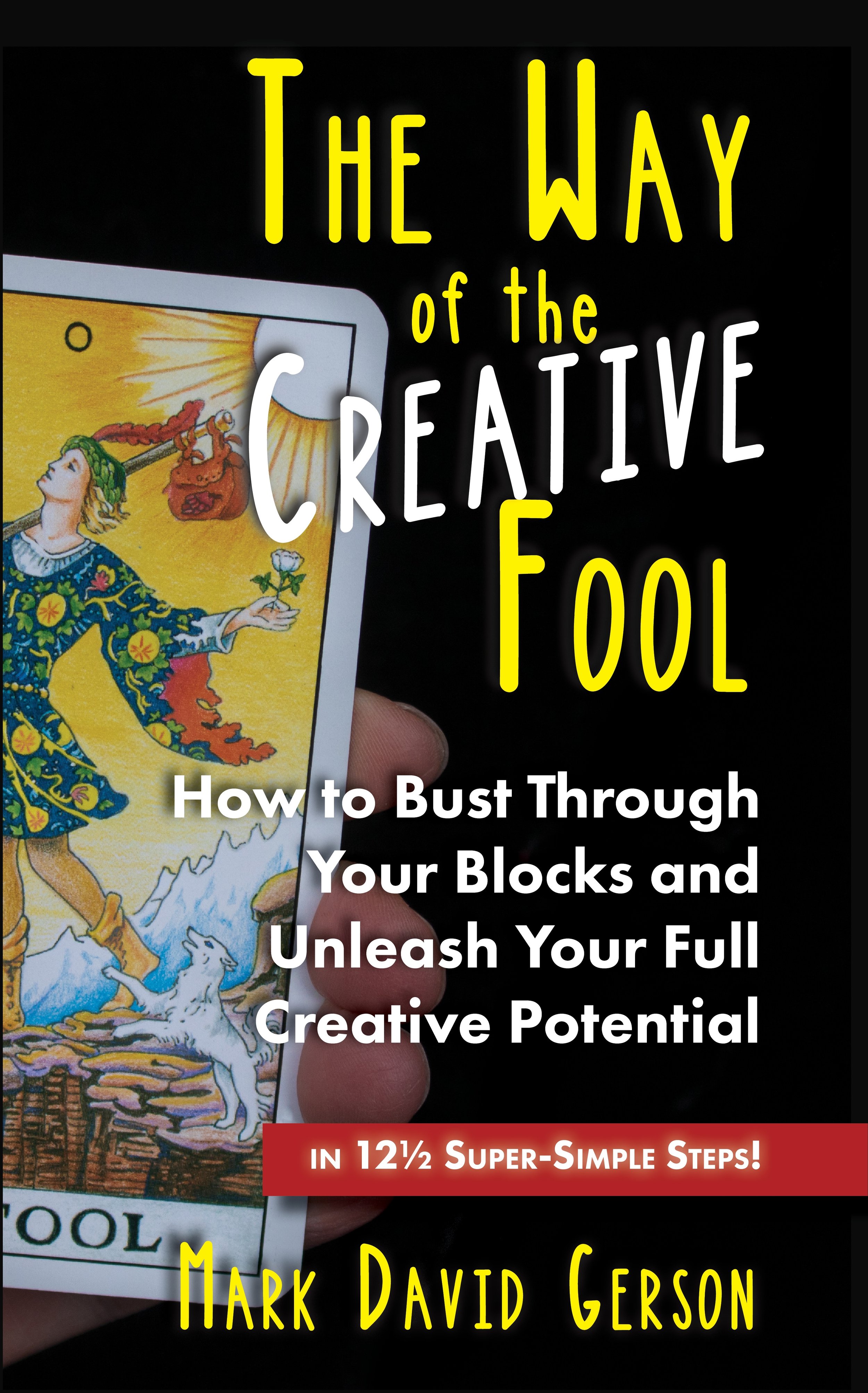
And if I haven’t finished The Lost Horse of Bryn Doon yet, I did finish The Way of the Creative Fool. It came out earlier this year. It’s full (Fool?) title is The Way of the Creative Fool: How to Bust Through Your Blocks and Unleash Your Full Creative Potential…in 12½ Super-Simple Steps! It’s the fourth inspirational/self-help title in my Way of the Fool series.
By the way, all four of the Way of the Fool books include stories from my life and other people’s lives that illustrate each of the steps.
More stories. More storytelling!
We Are All Storytellers
Thing is, we’re all storytellers. I’m not the only one.
We’re telling stories all day long. Even something as banal, as trivial, as a shopping list, is a kind of story. Everything I’ve told you so far in this blog post is a story. When you share how your day went, it’s a story.
Storytelling is innate. As poet Muriel Rukeyser put it: “The universe is made of stories, not of atoms.”
It’s easy to imagine that long before there was spoken or written language, our cave dweller ancestors would return to the communal fire from a day’s hunting and gathering and gesture, grunt and mime their adventures to each other. One way or another, we have been telling our stories ever since.
Evens infants, as babies, before we had language, we had story. We, too, would grunt, gurgle and mime our adventures, our desires, our dreams, to our stuffed animals…to anyone who would pay attention.
Everything we communicate, whether it’s that shopping list I mentioned, a casual water cooler chat at the office or a deep conversation with a close friend or life partner…it’s always some form of story.
That’s why I love computer scientist/theologian Anne Foerst’s characterization of human beings as Homo narrandus (“storytelling man”) instead of Homo sapiens (“wise man”).
Stories not only communicate our lives, they give meaning to our lives. That’s just as true of the stories we hear as it is of the stories we tell.
Why Your Stories Matter Too
That’s why I’m a storyteller. That’s why I write my books, and that’s why I started my Stories & Reflections podcast: to share with you the stories that matter to me.
Because if they matter to me, chances are they’re also going to matter to you. That’s the thing about stories. However personal they might be on the surface, whenever they’re shared from the heart, whenever they’re shared from our deepest inner core, they’re always universal.
But whatever stories I share, whether they’re fact or fiction, they’re about me and about you and about what it feels like to be us, to be human, in a world that’s increasingly complicated, increasingly challenging and, frankly, some days, increasingly scary.
My stories may not always begin with those magical words, once upon a time, those words that are so evocative and and conjure up all the stories we’ve ever heard. But they’re no less magical. Because stories are always magical.
My stories, and your stories.
So even as you read or listen to my stories, don’t neglect yours. Because it’s just as important to tell our stories today as it was to our cave dweller ancestors and to our infant selves.
And maybe, given the upheaval of these times, it even more important now than ever to tell our stories.
Because stories matter.
Your stories as much as mine.
For more inspiring stories, subscribe to my weekly Stories & Reflections podcast (click here to listen, or find it on your favorite podcast app or YouTube), and pick up a copy of my Acts of Surrender memoir.